Speaker by Various Artists

124

The system's pretty good, the expectations are crazy

by Gareth Morgan

What sort of shape is our health system in? Is it the third world cast-off that some commentators would have us believe, or is it a model of success? Sick of hearing from disgruntled patients, media reports and self-serving politicians, Dr Gareth Morgan and former treasury analyst Geoff Simmons decided to carry out their own independent study of the health system to get to the bottom of it. The study has just been published as “Health Cheque, the truth we should all know about New Zealand’s public health system”.

After spending six months carrying our more than 40 in depth interviews with doctors, specialists, administrators and researchers, I can honestly say the results surprised us.

The New Zealand public health system scrubbed up surprisingly well globally, which is a testament to the professionals involved. The real problem is that public expectations are out of control – they think it’s an “all you can eat” model. We want the latest treatments that our Australian and American cousins have, but our income is far below theirs. If the OECD average is our benchmark, we already have unmet need in NZ and it will continue to grow – higher incidence of respiratory, cancer and heart disease and markedly lower intervention rates for all three. That gap will get worse given the rising difference in incomes (& hence tax funding base) from the OECD average. In short, the public demands champagne level care on a beer budget. This is natural, because after all we don’t have to pay the bills! Meanwhile, we are competing for medical staff on an international market, and we need to match overseas salaries to attract more staff. New Zealand either needs to get rich quick or some hard calls need to be made, otherwise the cost of healthcare is going to quickly get out of control.

We need to start putting money where society gets the greatest benefit. There are some really basic things that we could do that could really improve the health of certain parts of our population, particularly the young and Maori and Pacific Islanders. We get 4 times the return from money invested in primary care and early intervention than from hospital treatments. We currently have the ambulance at the bottom of the cliff. The challenge is how to make primary care, early intervention and prevention of chronic conditions a more appealing investment to the public. Reducing obesity, perhaps by providing incentives to patients & their GPs would provide a massive return on the health budget long term for example. The attached section demonstrates the importance of making these investments in a bit more detail.

The question then arises of where the money comes from for this investment. The short answer is our health system needs to learn how to say no. We currently have a system that won't vaccinate Porirua toddlers but is happy to give a coronary bypass to a 90 year old Remuera spinster. In terms of returns to society for our health dollar, this is complete madness. We need a system that impartially draws the line where public health treatment ceases because it is too expensive to keep a person alive for too short a time. We also need to make sure people and families understand the real risks and side effects of continuing treatment, because then they might voluntarily choose to refuse treatment. We also continue to throw money at remote, inefficient provincial hospitals. These are expensive to run, provide minimal services and because few doctors want to work there they end up relying on expensive locums.

We could achieve this by having a National Health Priorities Committee led by the health profession to define the criteria for funding allocation across & within procedures. They would use an evidence-based set of criteria (like Pharmac) to deign the template for what services people can expect to receive from the health system. This would be public so that no member of the public or Press has any doubt as to why Patient A gets funding and Patient B doesn’t. This would reduce the need for local or front line discretion to be employed in deciding who gets what – the template would be set in stone until the National Health Priorities Committee meets again and changes it. Such a de-politicisation of the process is not just overdue, without it there will continue to grow inequities in the system between regions, between races, and between the ages of patients.

As evidence of the need for this de-politicisation of the prioritisation process, let’s take a closer look at what really is the relationship between prevention and cure…

- Geoff Simmons

************

EXTRACT BEGINS….
… from page 128-137 on primary health care….

Prevention is better than cure

We all know the old adage – prevention is better than cure. But is it? And if it is, should we do more of it? New Zealand is already a comparatively big spender on prevention and public health, as the chart below illustrates:


Click for big version

Given it can be very difficult to evaluate the effectiveness of preventative or public health interventions, it’s politically easy to divert money away from prevention, especially when there are high-profile cases in the press of people who are dying for lack of treatment. Yet despite all the column inches devoted to the waiting lists for elective care, international evidence suggests that the real health benefits come from having a comprehensive and easy-to-access primary care system. A review of hundreds of different treatments found that preventive and primary care interventions were four times more cost-effective than procedures in the rest of the health system. Yep, you heard right – four times better value for money! US evidence also shows there are high returns from boosting the numbers of GPs and doing check-ups to pick up diseases earlier. Other literature surveys have concluded that:

better in areas with more primary care physicians; second, that people who receive care from primary care physicians are healthier; and, third, that the characteristics of primary care are associated with better health
.
So we’ve got it right when our health system spends more on prevention than most other countries, although we could do a lot more still.

********

********

Dr Edric Baker
Dr Edric Baker is a Kiwi doctor who served as a medic in Vietnam during the conflict. There, he had the experience of working with locals in remote villages and was amazed at how well they coped in running their own care despite the total lack of modern facilities and resources. This awakened his vision of health services for the poor, by the poor. From the 1980s, Edric has devoted his life to building up a hospital in Bangladesh from scratch, training the locals in literacy and numeracy, then the basics of medical care. In 2007, they treated over 25,000 patients on a budget of $US 110,000 some of which, we’re proud to say, comes from the Morgan Family Charitable Foundation.

This tale of a Kiwi hero really shows what a difference simple primary healthcare can make for a relatively small investment. One of their most important programmes works with over 200 new mothers from 14 villages each year, and tracks each child up to the age of four. Their efforts are made all the more powerful when there is a commitment to getting people to be responsible for their own care – for example Edric’s TB eradication programme is entirely run by former TB patients. It should be no surprise that these sorts of treatments figure highly in the cost-effectiveness rankings. In 2000, the World Health Organisation produced a list of the most cost-effective medical treatments. They are almost all part of primary care or public health:
• preventing and treating tuberculosis;
• family planning;
• assistance for mothers before and during childbirth;
• AIDs prevention;
• immunisation;
• tobacco control;
• treatment of STDs, malaria and childhood diseases; and health education and nutrition.

Basic public health and primary care is by far the most cost-effective way to improve life expectancy. This may seem obvious to you and me, but it is worth reminding ourselves that a large proportion of the world’s population don’t even have this level of cost-effective care.

We fund all of these treatments already in New Zealand, although as we saw with Maori immunisation rates we could do more. True citizens of the world would probably worry less about getting a new hip so they can enjoy their yachting during retirement, and more about making sure mothers and children didn’t die during childbirth in the Third World. We could easily lift the average life expectancy of the world if we closed a few hospitals in New Zealand and helped deliver basic treatment overseas. In New Zealand, around five babies die in their first year of life per 1000 live births, on average. This is a tragedy. The UN estimates that the average across the whole world is around ten times higher – 50 per 1000 live births. This is a travesty.

********

If you have a good GP, they’re likely to help you prevent developing an illness, or at least spot it early. Having a good, cheap-to-access primary system ensures most conditions get picked up early, and patients don’t go on instead to pop up later as expensive emergency cases. By this stage, treatment is very expensive and it’s often too late to do much good for the patient. Obviously, the cheaper access is, the more people – particularly poor people – will use primary care. Greater coverage means that more people get treated, and the population is generally healthier. Contrast this with the US model, where at any given moment in time, some 45 million people have no insurance. Those with insurance get the most expensive care in the world (which isn’t necessarily the best – see below) while the uninsured get nothing. The benefit (in length or quality of life) for each additional dollar spent on the rich and insured is pretty small, whereas the benefit from offering an uninsured person primary care would be immense.

There are some other reasons for favouring primary care. Specialists are pretty good at treating conditions that fall within their hitting zone, but many people have more than one condition at a time. A specialist may well overlook something that is not familiar to them, or even exaggerate the significance of something that is (a tendency that shades into the ‘supplier-induced demand’ we will discuss in the next chapter). GPs, by contrast, are more likely to take a holistic approach to your care and treatment, and as the gatekeepers to the health system, they may even save you from yourself when you show up waving a printout from www.hypochondria.com and demanding treatment that is, from an expert perspective, unnecessary. A good GP or practice nurse can hold our hand and talk us down from our fear of the radiation from our microwave, or our fixation with the symptoms of whatever disease we’ve convinced ourselves we’re afflicted by.

You may think the US model – where patients are passed from one specialist to another and subjected to a barrage of tests – is superior, in that it’s better to be 100% safe than sorry. But American outcomes don’t support this. It turns out that 95% certainty is an acceptable trade-off, given that we avoid all manner of unnecessary tests and procedures at the hands of overenthusiastic specialists. This actually helps our health because, surprising as it may seem, medical treatments carry a medical risk too. Medical treatments themselves are the third biggest killer in the United States, behind heart disease and cancer.

********

Who guards the guardians?
A group of US doctors were given the following scenario. A forty-year old woman presents with chest pain after a fight with her husband. A check of her heart rate shows it is normal. The chest pain goes away. She has no family history of heart disease.

The doctors were asked what they would have done fifteen years ago, and what they would do now?
What gets funded?

Fifteen years ago, they would have sent her home. Maybe she would get a stress test (they would measure her heart rate during light exercise, for example, like walking on a treadmill) to confirm that there’s no issue, but even that would probably have been regarded as overkill. But today, the cardiologist said, she would get a stress test, an echocardiogram, a mobile heart rate monitor, and maybe even a cardiac catheterization (sticking a tube up a vein or artery to test blood flow around the heart). The last carries a risk of death. No wonder healthcare costs have ballooned over the years.

********

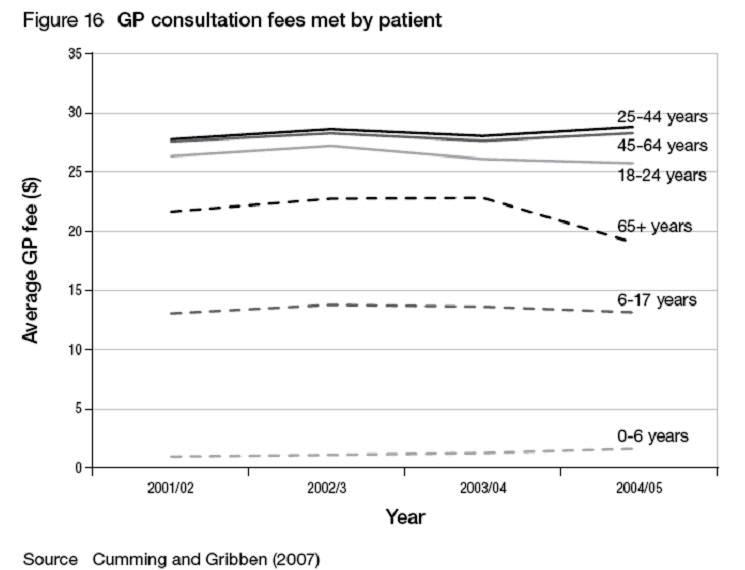
Prevention, then, is better than cure, and the effectiveness of spending in the areas of public health and primary care proves it. It’s a big thumbs-up to the fifth Labour-led Government, too, which in the early 2000s channelled huge amounts of money into primary care. Their aim was to get primary care – GPs, nurses, physios, pharmacists – working together with their local community in a much more preemptive capacity. Prior to their reforms, GPs were paid for each patient visit, so the sicker a person was, the more the GP saw them and the more money they made. There wasn’t much of an incentive to get patients to take care of themselves. Labour changed the system so that the payment to PHOs (who operate on behalf of GPs) was based on each patient they have enrolled, rather than per consultation. The idea was that this would shift the focus to prevention. Labour also increased the funding significantly in order to reduce the co-payment made by patients, in an effort to improve access. As shown in Figure 16, the average levels of fees have stayed roughly stable since 2000, which amounts to a fall in real terms.

Labour rolled out its increased funding to certain age ranges and groups over several years, and it only extended to cover the whole population in 2007, so the full effects have not yet been evaluated. But on the basis of their earlier increases, the funding led to lower fees and greater use of primary care (particularly for the elderly), though not, it seems, by as much as the additional funding. Their initial target areas were poor neighbourhoods, especially with high Maori and Pacific Island populations. In these areas, Labour achieved their goal of reducing fees to zero for children, $7-10 for ages 6-17 and $15-20 for adults. But in other, more affluent areas, they were seeking fee reductions for those aged 65 and over (without a Community Services Card) of $26, and average fees only fell by a paltry $12. These initial signs are worrying – over half of the new funding in affluent areas seems to have gone straight into the GPs’ back pocket. There’s some potential benefit – after all, we need to attract new GPs to the sector – but if affordable care can be delivered in poor areas, you have to wonder why it’s not being delivered in richer areas, too. We will shortly explore how many GP practices in affluent areas may be operating inefficiently, and how Labour’s cash injection may simply be prolonging their demise.

Click for big version

Other, early signs of the impact of Labour’s reforms give rise to cautious optimism, but not much more than that. On average, people are seeing their GP more, particularly the over-65 year olds, who as a group visit the doctor 25% more than they used to – after all, it’s now cheaper than calling an 0900 clairvoyant number for a chat. The extra cash has significantly reduced the proportion of people who can’t access a GP because of cost – this has fallen from 4% (in 1996/7) to 0.8% (in 2006/7) for children and from 6.3% to 1.8% for adults. However, the ultimate measure for improved prevention is a reduction in preventable emergency admissions to hospital, and these haven’t yet shown a significant, sustained fall. Have the reforms encouraged primary care providers to practise preventive medicine, as it was hoped they would? In fact, there’s reason to believe they have not, as we’ll shortly see. Labour’s dream was to realise Mickey Savage’s vision of universal free (or low-cost) GP care. With many GPs taking a cut from any funding increases, this now seems an increasingly unaffordable goal.

How far do we go down the road of preventive medicine? There’s considerable and mounting evidence, for example, that early childhood experiences (such as developing a loving bond with a mother) can have a positive impact on a lifetime’s worth of health outcomes, as well as other positive stuff such, as reduced crime.107 Evidence suggests that help to improve the mother-infant relationship targeted at young mums in high-risk communities can have a social payback of $6 for every $1 invested. Other successful programmes have used pre-school education to reach parents and children. Such investments are difficult to evaluate, and at any rate, it takes many years before the benefits are known.

This kind of preventive medicine shades into the realm of social care. Health and well-being has been shown to be correlated with indicators from many other areas of life, especially education, housing and employment. Counties Manukau DHB has piloted a programme that helps mental health patients deal with these and other issues. This pilot led to a dramatic reduction in inpatient admissions, and proved a cost-effective investment overall. But is this really the responsibility of the health service, or is it picking up the pieces for other failing public sector agencies? Does it indicate that it’s unhelpful to have the agencies that extend help to people in need – whether it be medical or social – working in silos? Do we need to develop a more holistic approach to the whole gamut of state-provided assistance?

All this talk of the value of preventative medicine obscures another important point. Increasing investment in prevention or primary care – as the Labour-led Government did in the 2000s – is unlikely to reduce the burden of elective surgery needs on the health system.110 This may come as a surprise – that the barrier at the top of the cliff doesn’t reduce the need for the ambulance at the bottom – but it stands to reason if you think about it. The fact of the matter is that we’re all going to fall off the cliff at some stage. All primary and preventive care does is extend our healthy lifespan, delaying the inevitable, as it were. If we’re putting our money into preventive and primary healthcare, does this mean we ought to be grateful for the increase in our healthy lifespan, even as we accept that resources have been diverted away from the system that will address our needs when that healthy lifespan nears its end? It probably does, but that’s almost certainly not the way it will work. We’ll grab with both hands the extended, healthy lifespan all that investment in primary care and prevention offers, and then bitch like crazy about the lack of resourcing of elective surgery when we reach the point when we’re relying on it. And in the absence of informed debate on the subject, the government will (on past form) rush to oil the squeaky wheel.

That brings us back to the question with which we opened this chapter. Do we want a health system that maximises our healthy lifespan on the basis of need and ability to benefit (regardless of the ability to pay)? Or do we want to make sure our parents get gold-plated service on the way out? Based on the assumption that a year of life of each citizen is of equivalent value (and so the lives of the young are generally worth more than the lives of the elderly), then in terms of the value per dollar, it’s a no-brainer. But clearly the good folks of Remuera and Roseneath don’t quite see it that way as they face the final curtain.

EXTRACT ENDS….

*************

The book Health Cheque is available to be purchased at www.healthcheque.co.nz

6

Freeviewer Diaries: Family Unity

by Freeviewers 4

It must have been the early 80s, or late 70s. Ian Fraser (I think) was working up quite a sweat, and so was my family, with Felix Donnelly explaining why he thought New Zealand men should spend more time talking about masturbation with their sons. My mother, father, two brothers and I sat there like stunned mullets. Tricky situation. Can't leave. Don't wanna stay. Check the room. Nobody flinched. Just watch and listen.

Lately, TV's not been so intense. Sure, The Tudors can intercut the ratification of the Church of England with a wild, wobbly-bosomed shag-fest, but that's just another Sunday night Brit drama. Not in the mood? Click. Miami CSI. Click. E bloody R. Click. Click. Click. Ads. Ads. Ads. Click.

With endless choice, and increased advertising hours, it's no secret that audience engagement in the medium has plummeted.

Now, my JC Matthew 320T Freeview DTR (translation: digital telly recorder) has granted me mastery of time itself, which, you'd think, should be sufficient to drive my engagement up a bit. And you'd be right. If the plan works out, I figure I should be able to build up a sufficient library to always have something good to watch on telly. In fact, that's a weird idea, that TV could actually be good. Still weirder that it could never be bad. It hints at that long lost possibility, in a time of one channel and few ads: someone actually sitting down and focusing on a TV programme, rather than flicking through them like a magazine.

I took longer than the other PA panellists to set mine up. I'd never seen one before, and I wasn't even sure which bits of gear on my roof (VHF, UHF, dish) were connected to the cable leading into my TV room. Breaking with a longstanding masculine tradition, I went straight for the instruction book. It was written in clear English, good thing, but didn't mention anything about what sort of roof-gear was required, or what to do if I didn't have it. I ditched the guide and just started plugging. Whatever it is I've got up there, the box duly got on with the job of auto-tuning. Whew.

There are two sets of component RCA outputs. For reasons I really don't understand, it seems that one set's for the telly, the other for my stereo amp. So, why do I need two complete sets? The first one didn't work, the second one did. Er, great. Also, some further tedious cabling technicalities regarding S-VHS and a fallen-from-grace DVD player.

I also noticed, with regret more than surprise, that the box quietly hums. Well, it is a computer, and computers hum. But my telly didn't hum before. I foresee an enclosed cabinet with a glass door. God, how grown up.

Anyway, after initial set up I spent about 2 hours missing things I might otherwise have seen on standard FTA channels, exploring the basic functionality and staring dumbfounded at The Krypton Factor (clearly, I lack something). I finally caught up with John Stewart in time for the Al Gore interview, wondering to myself if the benefits of all this new telly-tech will outweigh the effects of the pollution caused by its manufacture. I noticed no reference to this subject on the JCMatthew's packaging or user manual. But I reckon that would be of interest to many a TVNZ 6 & 7 viewer.

As with other PA panellists, the quality of my old cathode set is vastly improved with the DTR. Whereas a lot of channels were grainy, now none are: hooray. On the downside, I can also see areas at the edge of my screen where the image is starting to collapse, so I'm not even getting the full quid lo def, so I can't appreciate the improvement without being permanently reminded of the downside.

By the time I hit the hay, I'd scheduled about 15 or 20 hours of material to record: several series and an entire morning's worth of kids shows from TVNZ 6, but I'd failed to find any indication of how much of the hard drive I'd committed to recording future programmes. All I can see is how much I've used up with recordings I've already made (which on the first night out of the box, was none).

Worse, I've also found myself getting nixed from the recording scheduler because I've hit the two-shows-at-once limit. So it would help to indicate in the EPG if a programme falls at a time when the box is already scheduled to be maxed out. Show me what they are, and let me choose there and then, rather than have to exit the EPG and open the record list. Well, you can't.

Why give people control of the aspect ratio? How did this ever happen? Never mind black bands. Why not just let the footage roll in whatever aspect ratio the producer chose? Changing that default should be an active opt-out, and preferably.

I've noticed "software upgrade" potential. Can't wait to learn what that's all about.

I struggle a bit with the remote: the critically functional EPG, play and record list buttons are buried in a forest of image controls. "Info" is in number pad Siberia. I also need to apply reading glasses to read the tiny button labels, which I need to remove to see the screen. Maybe some different shapes for the basic EPG and play/record lists would help the kinetic use of the hand piece.

But hey, fair's fair. One minute, I've never laid eyes on one. The next, I'm picking it to bits. Thing is, three days into my hectic recording schedule, I've already got more stuff worth watching than I can view in a week. Or a month. That is a drastic shift from the previous, time-is-linear TV schedule. I love it.

In terms of content, my first few days have tended to focus on the expanded current affairs diet on TVNZ 7, and there is certainly a step change in this genre compared to the analogue offering. But it seems extraordinary that so much of this should be ghettoed on Freeview. Where are the masses supposed to get 10 uninterrupted minutes of the minister of finance throwing press releases at Guyon Espiner (who I thought did a great job deflecting them)?

Also in content-is-kingsville I watched a single ep of New Artland twice, and the ability to fast forward through Paul Holmes's intro to anything (such as Q&A) should be a minimum standard requirement for any media device. In another vein, I'm looking forward to Mad Men (Prime's been one of the grainy ones).

I seem to be missing some channels. I see on the Freeview website that the content on the satellite platform is different to the HD platform. This baffles me. Is "HD" code for UHF? I want Hi Def (despite that my TV isn't up to it) and I want all the channels. WTF? I want the lot, regardless the def. But I can't find out how, or even whether that's possible. Can I feed both the satellite signal and the UHF signal into the one box? Show me how.

I also miss Triangle. Besides not getting Stratos, I want the kooky local stuff. Of course, I can always just watch analogue.

Here's a thought: now that I've got my head around the basics, I'm going to have to up-wise my family members, some of whom have only just figured out how to turn on the old telly. And on a similar note: what's gonna happen to my recording capacity when I schedule it to capture one whole series of Coronation Street? Don't laugh. We have a fan in our house who's usually pre-occupied with baby-care when it screens (like, that would happen in the coro audience). Clearly, we can expect a settling-in period.

Telly is something that generates strong feelings in people, despite what they say. Everyone says telly's a load of crap, and everybody has their favourite programmes they'd never do without, which just goes to show you can't trust audience researchers. With DTR, it's a whole new gig. I can say with certainty that yes, this will change the way I watch TV.

Channel surfing FTA is like reading a glossy magazine. Tattler, say, or Nat Geo. You're there, but you're not. Ad's come. You finish the dishes, make a pot. But take the live element out, and the ability to select what you want to watch, and suddenly, there's something worth paying attention to. You know this is something you're likely to engage in, and there'll only be minimal interruptions (or as many as you like).

It's remotely conceivable, both from my early experience and anecdotally from others, that I may never watch live TV again. Which is sad, in a way, because it sort of lets broadcasters off the hook: they'll be able to pump even crappier dross to the linear masses in prime time, leaving the more fortunate with an $800 workaround, using downtime broadcast hours not for viewing time, but for real-time content downloads.

I don't mind the proliferation of media. It's the dispersal of audiences that scares me.

James Littlewood, JC Matthew 320T Freeview DTR

526

ACTA: Don't sell us down the river

by Colin J

It's tempting to see the confrontation between the entertainment industry and the Internet as some kind of moral issue; a clash of the heavyweights with only one possible outcome: a triumph of good over evil. In the red corner we have the people who bring us recorded music and Hollywood films, who have spent the last decade trying everything short of physical violence to stop people from getting access to their products for free. And, ladies and gentlemen, in the blue corner we have the plucky little Internet, which has grown up overnight into a 200kg gorilla, empowering right-thinking people around the world and making despotic regimes tremble.

Would that it were that straightforward because then we could settle the whole struggle with a political process assisted in the usual way by name-calling in the media. Dear Mr Prime Minister: Do you want an educated population or an entertained one? An efficient business sector or one that still sends paper letters? The opportunity to buy air tickets online in seconds or jobs for travel agents on every city block? A vibrant New Zealand cultural sector or an endless diet of overseas re-runs?

In fact, the situation is even simpler than that. There is now no cost to distributing information. That's not rhetoric - it's an indisputable fact. It means that people who rely for their income on being a toll-gate on the flow of information don't have a business model any more. Artists can still create and charge people for appreciating their work directly, but those who make their living from recycling imperfect copies of what others do are going to find it more and more difficult from now on.

This is the context for the innocuously-named Anti-Counterfeiting Trade Agreement (ACTA to its friends), an international treaty being negotiated by the governments of New Zealand, the EU, Canada, the US and a few other countries. Rumours have persisted for some time that this treaty is really about controlling copying on the Internet, as well as, or perhaps instead of, controlling the flood of fake Prada handbags and Rolex watches filling our shops. And rumours are what we have to rely on because no-one has seen the text of ACTA. The government officials negotiating it have told us that it's far too commercially sensitive for the people it would affect to be able to actually see it before it's all signed off by Obama, Gordon Brown or his successor and John Key.

It's not strictly true to say that no-one has seen the ACTA drafts, of course. The officials negotiating it obviously have, although they aren't talking about it. But, despite the potential effects on everyone who uses the Internet, the text of the treaty has been kept very quiet. During the US election campaign last year, Obama said that he would make the draft treaty open and stop treating it as a matter of national security. That hasn’t happened, but in a breakthrough of transparency the text of ACTA has now been shown to selected lobbyists.

We don't have to think too hard to figure out which side of this debate will be employing lobbyists. The people who stand to lose from an attack on the Internet to prevent people copying things are ordinary folks, run of the mill Internet users, not just those who like to download copyrighted music and movies. The people want that attack on the Internet, because it is destroying their business models, are a handful of very well-resourced industry associations and big companies. The same people who claimed that the very existence of recorded music would cause human vocal chords to atrophy, or that the popularity of the VCR (remember those?) would be "as dangerous as the Boston Strangler was to a woman at home".

The only person not an advocate for the recorded entertainment industry who claims to have seen a copy of ACTA is Canadian law professor Michael Geist. He says that ACTA is quite as bad as the rumours claim; that it contains a requirement for countries to implement law to force ISPs to cut off people's Internet connection if they are *accused* of copyright violation, to make it a criminal offence to break the digital rights management software that prevents blind people from accessing electronic books, and to enact the anti-competitive provisions of the US Digital Millennium Copyright Act which are used for such things as preventing third parties from refilling printer cartridges. It’s no accident that pharmaceuticals are more expensive in the US than almost anywhere else.

This would be very bad indeed for everyone who uses the Internet, except for a few large companies and industry organizations. Arbitrarily cutting off people’s Internet without due process would kill the innovation that it has allowed by making Internet providers liable for allowing anything those companies didn’t want on the Internet. It would make the Internet into more of a TV system, something that the entertainment industry is more used to.

We’ve already seen provisions like this in New Zealand law. John Key's government, on entering office, was persuaded by a public outcry not to implement Section 92A of the Copyright Act which would have subjected New Zealanders to the draconian (his word) provisions of cutting off people’s Internet connection on the basis of an unsubstantiated allegation. To Labour's shame, it had passed that law before the election with no public consultation, a fact that can't have been lost on observers as they watched front person Judith Tizard lose the Labour stronghold of Auckland Central. There's still a chance for S92A to come back; either through the Select Committee currently considering its replacement, or through some kind of enabling legislation to implement an international treaty. Yes, ACTA.

There is just starting to be a fuss world wide among the digerati about the potential for this secretly-negotiated international treaty to disenfranchise the great majority of Internet users from a say in how their medium is policed. In many countries people are worried that their leaders won't be able to resist an opportunity to look statesmanlike by signing an international treaty with that nice Mr Obama. Perhaps some countries will find it a condition of a free trade agreement with the US.

All this leads to a question about governments: just how do these decisions get made in the first place? There's no doubt that the music and film trade associations are a formidable lobbying force. How else can we imagine that politicians make decisions favouring the lobbyists at the expense of the rights of ordinary citizens?

If I come over as a little irritated about this, that's because I'm seethingly angry. Protecting the growing Internet from ignorant interventions used to be a matter of philosophy, of ideology if you like. I like to think that laws that affect New Zealanders are in made New Zealand and with due consultation with those affected. That was before I and others were sworn at by the responsible minister for suggesting that breaking the Internet without asking its users might not be a good idea. It was before I watched New Zealand go to the brink of being the first country to deprive someone of a basic human right because their flatmate or employee was accused of copying a song. It was before I watched the ACTA treaty being negotiated while being kept a secret from the people whom it affects.

I can’t accept how New Zealand politicians can let this just happen. How dare they take more notice of secret overseas treaty negotiations and industry lobbyists than they do of their constituents? The last government passed S92A and paid for it, although I doubt that was the only reason for its demise. The current government is still permitting its officials to take part in a secret process designed to curtail the rights of New Zealanders. How DARE they sell ordinary New Zealanders down the river?

I still believe - pity me if you like - that the vast majority of politicians are good people who go into Parliament and into government to make a difference, to do good things for their fellow human beings. I can only assume that something about the air-conditioning in the Beehive allows some of its inhabitants to get so far out of touch with the majority of people who put them there. That must be how we have MPs being, shall we say, less than grounded about how others might view their personal expense claims. And it can be the only explanation for those who show contempt for ordinary Internet users - most New Zealanders - by tolerating a process aimed at legislating away their rights.

After all, the alternative would be to assume that politicians were completely in the pocket of well-heeled lobbyists. And I don't believe that at all.

0

The Freeviewer Diaries (4)

by Mark Dansey

Seven weeks is a long time to wait for something you expected to take seven days. So it was for our Magic TV. Finally on Friday the 30th of October, it was couriered to my work. At long last!

Taking my Magic TV out of the box, it looks impressive. It has no buttons on the box, and it has many outputs, from S-Video through to HDMI. On my TV I used the latter. Starting it up for the first time, you are guided through an easy setup process where it asks you about your TV's aspect ratio, output settings, et cetera. Then the Magic TV scans for channels automatically.

Setup took the best part of two minutes. In that quick time, I had set up Freeview. Looking at the receiver, it has an informative front panel display. At a glance you can see your remaining hard drive space in a rudimentary graphical representation. The display also shows which channel you are on, and if you are playing a recorded programme it will display the running time. Furthermore, the front display shows a familiar red recording light and a red scheduled recording clock icon. Less important to the consumer are the output indicators. However I still think you would find this helpful for troubleshooting reasons, or if you had friends who are impressed by screen resolution and refresh rate.

When I got it up and running with my Sony Bravia, it looked stunning. Finally, this is what all the fuss was about. It was worth the wait! I could detect the picture clarity right away. When I eventually found a programme broadcast in high definition, it was amazingly clear.

What about the pros and cons?

The good:

• Live TV pausing is great, if slightly freaky. Takes a bit of getting used to.
• The electronic programme guide (EPG) is simple, clear and very useful.
• The record function is very easy to use. Recording can be done either by pressing the record button on the remote, making a scheduled recording using the EPG, or using the timer record function. If you have opted to record a programme which Magic TV detects is a series, it will ask if you wish to record every episode in that series. It is smart enough to not just record the same time-slot every week - if repeats are on late at night, or if the programme's scheduling has changed, it will record those too.
• The big hard drive is reassuring with a massive 500 gigabytes of space.
• Picture output is good, even on standard definition programmes. However, some older programmes not broadcast in 16:9, like Friends, don't have very good video or audio output.

The bad:

• Rewind and fastforward of programmes is cumbersome. For example, if you were rewinding back to 10:00 minutes into a programme, and you pause at 10:00, it will display 10:00, however when you press play it resumes in a position a few minutes before or after this. This is significantly worse than seeking with DVD, and I would expect better from a hard-drive, which should have a better read speed than compared to a DVD.
• When you pause live television, an annoying timeshifting icon appears in the upper left hand corner of the screen, which comes and goes every three seconds.
• Magic TV includes function to "cut mark" recorded programmes. This means that you can select a section of a recording so that it will not play (good for cutting out advertisements). However, this still shows on the progress bar as a black section. If you wish to permanently remove a section (so there will be no gaps on the progress bar), the owner's guide claims that edits can be made permanent by selecting the programme from the recorded programmes list, pressing "OK" and selecting "Edit and Move". Try as I might to find this menu, I have come to the conclusion that it does not exist on my Magic TV, and this is an erroneous entry.
• Device crashes whenever I select "NZ Herald Technology" news in the RSS feeds. Strange!
• Programmes are shown as being broadcast in high definition in the info banner when they are not. The owner's manual states that "HD icon shows the current programme is broadcast in high definition." It seems the HD icon is shown whenever a channel is selected which broadcasts in high definition. For example, Neighbours is shown in the Magic TV info banner as high definition. However, it does not show the

TV2 high definition logo, like displayed on The Cult.

The first week of using the Magic TV MyFreeview|HD recorder has been great. It has already changed the way we watch television with recording and timeshifting. It'll be good to see an updated firmware which allows the USB ports to be used for external storage and to export recorded programmes.

Mark Dansey

54

It's meant to be hard

by Slarty 09

From time to time an event or period in history occurs that is so significant it enables step-changes in the social and political landscape. Recent examples are Roosevelt's "New Deal" that shifted the terms of the "social contract" in the United States, and put in place institutions that (arguably) delivered more equity within US society.

More recently, and locally, the poor economic position of Australia in the late eighties led to a consensus deal that bolstered the fiscal foundations of the Commonwealth: the union movement traded pay rises today for stability tomorrow when accepting compulsory superannuation contributions. As with so many policies, the major factor was that it was universal and therefore perceived as fair. Bottom line, Australia now enjoys a significantly improved savings rate, meaning access to capital, and a tax structure that (while not perfect) doesn't actively encourage real-estate churn.

The position of New Zealand in the global landscape is difficult to ascertain sometimes when we are embroiled in the day to day, but there are a number of simple facts that we can just accept: about 1/3 of export earnings are from tourism, 1/3 from dairy and 1/3 from everything else.

New Zealand punches above its weight in global affairs due to its environmental and ethical position -- while we (rightly) wring our hands, fret and criticise domestically, the fact that NZ is nuclear-free and generates nearly 80% of its electricity from renewables, as well as being the first country (but not State -- that honour goes to South Australia) to give women the vote, together with our maturity with regard to tackling "post-colonial" issues gives us significant global political capital. And we're not just a bunch on lefty-pinko-liberals: we are one of the few nations to genuinely accept the concepts of free trade.

All this means that citizens of other countries look to us in many areas, wishing their own nations had the political courage to be different, which leads me to the point of this essay. We need to be different. All the things for which our little country is famous are because we took a stand, a pragmatic, simple position that larger countries with entrenched interests can barely countenance.

So forgive my frustration to have watched a new government which had been handed one of the greatest opportunities for radical change in the last decade fritter away the chance to genuinely deliver anything that will improve the position of this nation. Here's the key point John: we will never get ahead by trying to copy the old world. We'll never catch up to Australia by trying to dig bigger holes to sell to the Chinese. We need to differentiate and grab our niche, not copy the policies of Britain (education) or the US (the ETS).

We need to be different. We need to pick from the 2% of the global population who don't want to operate in socio-political environments where the entrenched vested interests are so significant that the bar to change is too high to contemplate.

Forgive my language, but you are pissing away a magnificent opportunity, simply because you are petrified of another 10 years in the wilderness. Or is it that you don't know what to do? The clamouring from the tired old business roundtable-esque arguments, versus the innate selfishness of the Grey movement: it's hard to know what to do isn't it? You're not used to having 4.2 million people judge every decision you make.

I do have some sympathy for your position. I'm pleased you're trying to stick the promises you made during the election. But now you and your colleagues have been in the chair for a while, and have access to the magnificent information of the public service (it's all much more complicated than it looked isn't it?) you should be getting a few ideas.

I realise you are surrounded by a bunch of crusties who have been spouting the same dogma for so long they can't shift their calloused little minds. So here is an idea.

There are probably a bunch of backbenchers on both sides of the house who are getting tired of waiting for the same old faces to (at the risk of sounding harsh) basically die and make way for some 21st Century thinking.

You could, if you put some "stuff we know needs to be done" on the table, possibly get a coalition together that would make the grey-haired old roadblocks irrelevant.

To get you started, here are some ideas cleaned from radical pages such as The Wall Street Journal, The Economist and New Scientist:

• Dump the dogma around education. All of it. Entrench the nil-interest philosophy and then let the teachers teach. Get government out of the classroom, and give them more money (see below how to generate several billion dollars with which to do this);

• Introduce a carbon tax that abates GST (i.e. drop GST by an amount that reflects the revenue from carbon). This would for example make food cheaper and petrol more expensive, and there's no need for government to choose which vested interest gets the taxpayer subsidy;

• Give the Reserve Bank another tool -- a compulsory super levy. So every New Zealander has a KiwiSaver account, and when the economy is overheating, people are compelled to put money in it. Think about it.;

• Decriminalise drugs -- the Portuguese model is probably worth a look (another country that gets ahead by being different, not the same). Put the hundreds of millions of dollars saved into the health & education system;

• Raise the retirement age, but not by an arbitrary number. Make it a proportion of the average life expectancy of, say, a 40 year old. So you are told when you are 40 how old you will be when you get NZ Super. That leaves you 25 years plus to sort out some savings;

• Put in place an electricity billing system that converts all the retailers into finance companies, and all the local lines companies into power brokers. This means one will fund me to put local generation on my house, and the other has to buy the output and feed it into the local grid. Capitalise the finance companies from the savings from Transpower never having to build another trunk line.

Here's the thing John: if you can't find at least one thing off that list that you are willing to tackle, then you don't have what we need in a leader. It's meant to be hard. Blithering around telling us what you're not going to do, or re-litigating the tired old 20th century policies that your crusties have on their wish list just doesn'tcut it.

We want more. You've got 12 months.

This guest post is by "Slarty". Surprisingly enough, that byline is a pseudonym